
Puzzles for Kids - Full game
CLEVERBITEducational
4.03.00 Reviews
- Version
- 5.9.3
- Installs
- 10.00K
- Age Rating
- Everyone
Screenshots
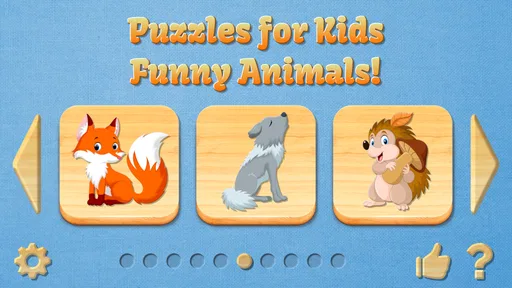
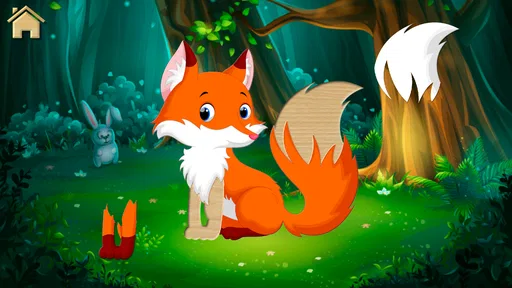
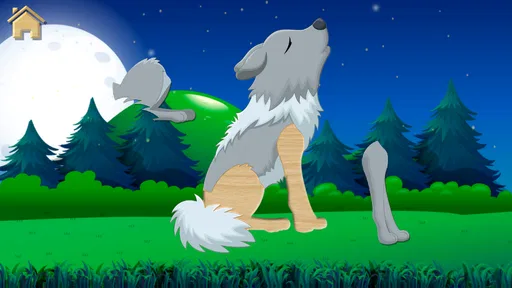
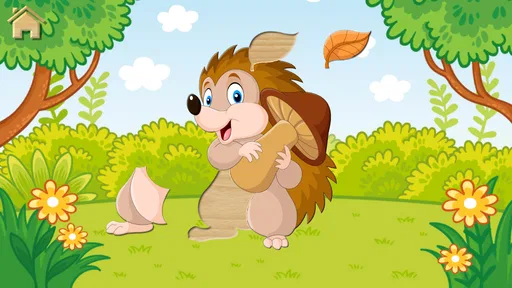
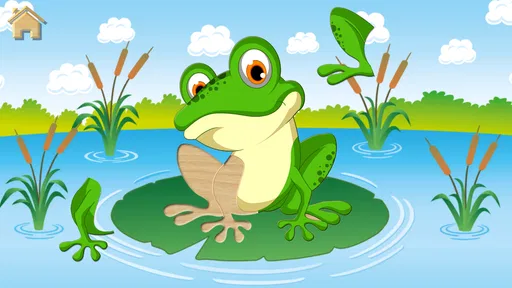
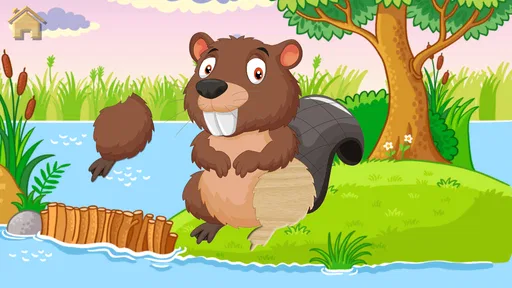
Our Review of Puzzles for Kids - Full game
 Analysis by Appyee
I found Puzzles for Kids - Full game most interesting when I stopped treating it as a simple way to keep a child busy and watched what actually happens during play. The experience is built around a very clear loop: a child chooses an animal puzzle, moves pieces into place, receives immediate visual feedback when the picture comes together, enjoys the completed image, and then decides whether to begin another one. That simplicity is the main appeal. There is very little between the child and the first action.
This is an educational game from CLEVERBIT aimed at young children, with an Everyone age rating. It is a paid title rather than an ad-supported download, costing $4.99, and the full experience unlocks all of its animals. That makes the purchase easier to understand than many children’s puzzle apps that begin with a free sample and repeatedly push extra content. My overall impression is that this is best viewed as a calm, focused puzzle activity for early learners, not as a broad teaching suite or a game designed to challenge older children.
How the puzzle loop works in everyday play
I find the puzzle loop most useful when I let the child set the pace rather than turning each picture into a lesson. In this section, I’d focus on how a quick attempt can reveal whether the child is enjoying the visual matching or needs a little help with touch controls. That distinction makes it easier to decide how to introduce the next puzzle.
The first action is deliberately easy to understand
The strongest part of the design is how quickly a child can begin. The animal theme gives the activity an immediate purpose: choose an image, look at the pieces, and try to rebuild it. A young player does not need to understand complicated menus, a story, a scoring system, or a set of rules before making progress. That matters when the app is handed to a child who is still learning how to use a touchscreen confidently.
In my experience, the first few moments of a children’s game often decide whether the child stays interested. Here, the puzzle itself is the invitation. The action is concrete and physical: touch a piece, move it, compare its shape or position with the open space, and try again if it does not fit. That creates a small problem the child can understand without an adult translating instructions.
The animal subject also gives parents an easy way to turn play into conversation. Instead of only asking whether the puzzle is finished, I would ask the child to name the animal, describe its colors, or make its sound. The game does not need to carry the entire educational experience by itself. It works well as a visual prompt for a short exchange between an adult and a child.
There is a useful trade-off here. The straightforward interaction is welcoming for beginners, but it will not satisfy children who want complex rules, multiple difficulty systems, or a long adventure. A child who already completes conventional jigsaw puzzles quickly may find the activity more like practice than a serious challenge. I would choose it for accessibility and repetition, not for advanced puzzle depth.
Feedback arrives at the moment it matters
Good early-learning software depends on feedback that is quick enough to connect an action with a result. When a piece is moved correctly, the child can see that the picture is becoming more complete. When the choice is wrong, the child gets another chance instead of being pushed into a complicated penalty cycle. This creates a forgiving rhythm: attempt, observe, adjust, and continue.
That rhythm is more important than a high score in this context. A young child may not yet have the patience to analyze a mistake, but can understand that a piece is not in the right place and try a different position. The lack of pressure helps keep the focus on visual matching and hand control. I also like that the animal image gives the child a reason to keep looking closely rather than moving pieces at random.
Parents should still expect to provide occasional support. A child who is new to touch controls may drag too quickly, release a piece early, or become frustrated when a piece does not behave as expected. Sitting nearby for the first session can make a difference. I would demonstrate one move, then let the child take over rather than solving the whole puzzle for them. That preserves the useful part of the activity: the child notices the relationship between position and result.
The feedback loop is especially suitable for short periods after school, during travel, or while waiting somewhere without wanting to introduce a loud or complicated game. It is also a reasonable option for a child who benefits from repeating the same type of task until the movement feels natural. The limitation is that repetition can become predictable. Once the child understands the interaction, the adult may need to add conversation or set a small goal to keep the session meaningful.
Completion provides a small but effective reward
The reward is not a complicated economy or a collection of competitive achievements. The satisfying moment comes from seeing an animal picture completed after working through its pieces. For young players, that visual result can be enough. The child begins with a broken image and finishes with something recognizable, which gives the activity a clear beginning, middle, and end.
I think this kind of reward is healthier for a preschool puzzle than constant scoring. A visible completed picture recognizes effort without making the child compare performance with anyone else. It also gives parents a natural stopping point. When the image is finished, an adult can say, “That one is complete,” and ask whether the child wants to continue or take a break.
The full paid version is important to that feeling of choice. Since all animals are unlocked and the game has no ads, the child is not interrupted by advertising or repeatedly confronted with a locked selection. That makes the reward feel connected to finishing the puzzle rather than to watching something or asking an adult to buy another item. For a family choosing a children’s app, this is one of the clearest reasons to prefer the complete version over a limited trial.
Still, buyers should keep their expectations realistic. Unlocking all the animal content does not turn the game into a large curriculum. The reward is mainly the completed puzzle and the opportunity to start another. If you are looking for letter practice, counting lessons, spoken instructions, or a wider set of school subjects, a dedicated early-learning platform will probably be a better match.
The reset is what makes another session possible
A good reset is easy to overlook, but it determines whether a child can play independently. After an animal is completed, the experience can return to the basic choice of starting another puzzle rather than forcing the child through a complicated progression. That supports the natural way young children play: they may finish one picture, repeat a favorite, or move on because a different animal catches their attention.
This also makes the game useful in small doses. I would not plan a long, uninterrupted session for a young child. Instead, I would offer one or two puzzles while waiting for dinner, during a quiet morning, or as a brief activity before bedtime. The repeatable structure means the app can fit around family routines instead of demanding a large block of time.
There is a practical advantage to having no ads in this reset cycle. A child can finish a puzzle and continue without an unrelated commercial breaking concentration. Parents also avoid having to explain why an advertisement appeared or why a tap opened something that was not part of the puzzle. That cleaner transition is particularly valuable when a child is using the device with limited supervision.
On the other hand, the same open-ended reset may feel too loose for adults who want a carefully sequenced learning path. There is no reason to assume that completing one animal prepares the child for a specific next lesson. If your goal is a structured program that records progress from one skill level to another, this game is not the right tool. Its strength is repeatable practice, not formal assessment.
Who will get the most from it?
I would recommend this game to parents of young children who enjoy animals and are beginning to develop touchscreen coordination. It is also a good fit for grandparents or caregivers who want a simple activity they can understand immediately and discuss with the child. Because the game is rated Everyone, it is positioned as a broadly suitable family title rather than an app for older children.
A realistic use case would be a child waiting at a restaurant. Instead of opening a fast action game with confusing controls, the adult can offer an animal puzzle and sit with the child for the first attempt. The child moves pieces, watches the image become recognizable, and finishes before the meal arrives. The adult can then close the app without interrupting a story campaign or losing a complicated game state.
It may also help a child who becomes discouraged by games that punish mistakes. The puzzle format allows another attempt and keeps the goal visible. I would use it as a gentle practice activity, especially when the child is learning to coordinate a finger movement with a visual target.
I would skip it for children who need substantial challenge, competitive play, or a broad educational curriculum. Older children may complete the puzzles too quickly, while children who do not enjoy animal pictures may have little reason to return. Families that prefer free apps may also decide that the upfront price is not worthwhile, even though the complete version avoids ads and locked animals.
How it compares with common alternatives
Compared with physical wooden or cardboard puzzles, this game is more convenient and easier to carry, but it does not provide the same tactile resistance or three-dimensional handling. A physical puzzle lets a child feel the edge of a piece and spread pieces across a table. The app is better for travel and quick sessions, while a real puzzle may offer richer hand-on-table practice.
Compared with free puzzle apps, the paid model is simpler for a parent. There are no ads interrupting the activity, and the animal selection is fully available from the start. The trade-off is that the family pays before knowing whether the child will enjoy this particular style of play. I would make the purchase when the child already likes animal puzzles, not as a blind choice for a child who rarely engages with this format.
Compared with large educational subscriptions, this title is narrower and easier to understand. A subscription may offer letters, numbers, stories, music, and progress tracking, but it can also overwhelm a child with choices. This game has a smaller purpose: complete animal pictures through direct manipulation. For a short, focused activity, that narrowness is a benefit. For a complete home-learning program, it is a limitation.
Practical details before installing
The game was released on December 5, 2017, and its current version is 5.9.3. It requires at least Android 7.1, so families using an older device should check compatibility before planning around it. The title has passed ten thousand installs and holds a 4.0 average from around 189 ratings, which suggests a modest but established audience rather than a massive mainstream game.
Those figures do not tell me whether every child will enjoy it, but they do place the app in the category of a small, focused children’s title. I would pay more attention to the child’s age, interest in animals, and comfort with drag-and-drop interaction than to the rating alone. A four-star average can reflect very different expectations: one parent may value the quiet simplicity, while another may want more educational variety.
The price is also part of the decision. At $4.99, this is not a free experiment, but it is a single purchase for the full game rather than an experience built around advertisements. For my own buying decision, I would compare that cost with how often the child is likely to return to the puzzles. If the app will be used repeatedly during short waiting periods, the complete, ad-free format makes more sense. If the child loses interest after one attempt, a physical puzzle already at home may be better value.
I would introduce it with the device set up for comfortable use and with an adult nearby the first time. The most useful support is not to finish the puzzle for the child, but to ask questions such as, “Which part of the animal do you see?” or “What happens if you try that piece near the edge?” Those prompts turn a basic matching activity into observation and problem-solving practice without adding pressure.
My verdict on the action-feedback-reward-reset cycle
The central loop works because every stage is understandable. The child takes one action by moving a puzzle piece, receives immediate visual feedback, earns the satisfaction of a completed animal image, and can reset into another short attempt. That structure gives the game a reason to begin again without relying on ads, complicated rewards, or competitive pressure.
My favorite quality is its restraint. The app does not need to be explained as a major learning system to be useful. It offers a small activity that can support concentration, visual matching, and touchscreen control while giving an adult something concrete to talk about with a child. The full unlock and ad-free presentation make the experience feel more appropriate for a family device than many free alternatives.
Its weaknesses are equally clear. The educational scope is limited, the repetition may not hold an older child for long, and it cannot replace the tactile experience of a physical puzzle or the breadth of a full learning suite. I would not buy it expecting measurable school progress or a deep game system. I would buy it for a young animal fan who benefits from calm repetition and a clear sense of finishing.
For that audience, I think Puzzles for Kids - Full game is a sensible recommendation. CLEVERBIT has kept the interaction approachable, and the $4.99 purchase removes two common distractions: advertising and locked animal content. If your child enjoys rebuilding pictures and you want a quiet activity that can start and stop easily, this game earns a place on the device. If you need advanced difficulty, broad lessons, or physical puzzle handling, choose one of those alternatives instead.
Verdict
Strengths of Puzzles for Kids - Full game
- Simple controls make it easy for young children to play independently.
- Bright illustrations and cheerful sounds help maintain children’s interest.
- Puzzle difficulty is suitable for developing early problem-solving skills.
- Short levels work well for quick play sessions.
- Works offline, making it useful during travel or without Wi-Fi.
Limitations of Puzzles for Kids - Full game
- Some children may outgrow the puzzles quickly.
- Limited variety can make repeated play feel predictable.
- Sound effects may become distracting during longer sessions.
- Progression may offer little challenge for older preschoolers.
- Parents should check in-app content and privacy settings before use.
Similar Picks in This Category
View All
Little Panda Policeman
BabyBus4.0

Monster Trucks Game for Kids 2
Raz Games4.1

Little Panda's Chinese Recipes
BabyBus4.4

Little Panda's Restaurant
BabyBus4.4

Little Panda's Ice Cream Games
BabyBus4.3

Baby Panda Care
BabyBus3.8
Frequently Asked Questions
What is Puzzles for Kids - Full game?
Puzzles for Kids - Full game is a child-friendly puzzle app designed to introduce young players to simple matching and picture-completion challenges. It typically uses colorful artwork, straightforward controls, and gradually more demanding layouts to keep children engaged. The game is intended primarily for preschool and early-school-age users who are developing concentration, visual recognition, coordination, and basic problem-solving skills.
Is Puzzles for Kids - Full game suitable for young children?
The game is generally aimed at younger children, especially preschoolers and early learners, because its puzzles are easier to understand than traditional adult puzzle games. However, the ideal age depends on the child’s patience, reading ability, and familiarity with touchscreens. Parents should try the first few levels themselves and supervise younger children to ensure the difficulty, images, and instructions are appropriate.
Does the full version require payment or include in-app purchases?
The title indicates that this is the full version, but pricing and purchase conditions can vary depending on whether you download it from Google Play or the App Store and whether the developer changes its business model. Before installing, check the store listing for the current price, advertisements, subscriptions, and in-app purchase information. Reviewing these details is especially important when children use the device.
Can children play Puzzles for Kids - Full game without an internet connection?
Many basic puzzle apps can be played offline after installation, which makes them convenient for travel, waiting rooms, or situations without Wi-Fi. Nevertheless, some features may still require an internet connection, such as downloading additional content, displaying advertisements, restoring purchases, or sending analytics. Test the game in airplane mode before relying on it for offline entertainment.
What skills can children develop while playing this puzzle game?
Puzzles for Kids - Full game can support several early-learning abilities through play, including visual matching, shape recognition, hand-eye coordination, attention, and persistence. Completing a puzzle may also help children practice planning and problem-solving in a low-pressure environment. It should be viewed as an entertaining educational aid rather than a replacement for creative play, reading, physical activity, or direct interaction with parents and teachers.
Play our best games!


